
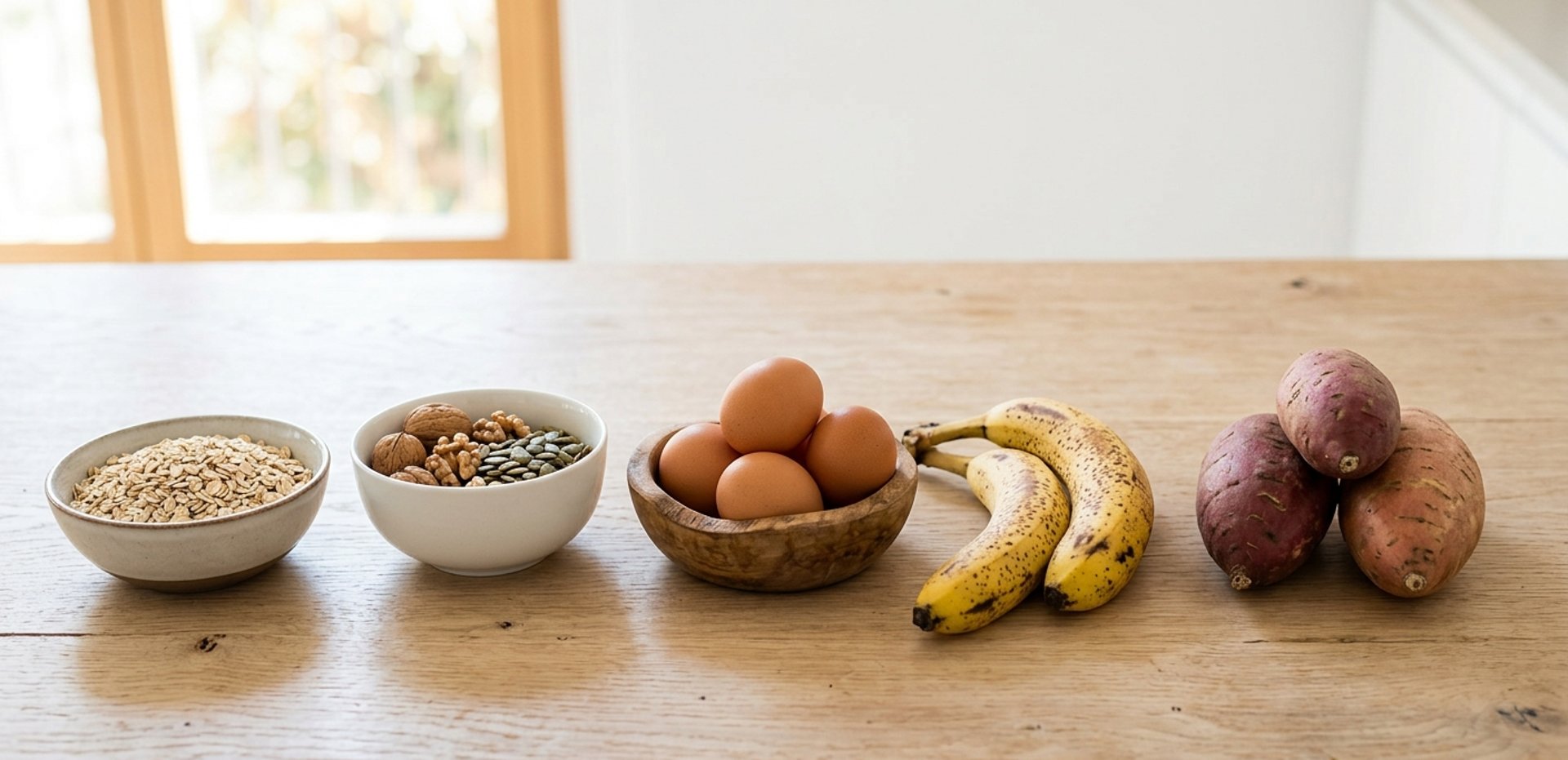
Natural Energy Foods: 5 Ways to Boost Energy Without Coffee
Tired of depending on caffeine? Discover 5 natural energy foods that fuel your body and mind without coffee. Simple, real nutrition tips for sustained daily energy.
NUTRITION
5/24/20267 min read
What if you could feel alert, focused, and energized without depending on caffeine? The answer might already be in your kitchen.
Why We Rely on Coffee for Energy
Coffee is the world's most popular productivity tool. Billions of cups consumed daily. And for good reason — caffeine works.
But there's a problem.
When coffee becomes your primary energy source, your body starts depending on it just to feel normal. Without it, you feel foggy, irritable, and slow. The caffeine boost gets shorter. The crashes get harder. And you end up needing more just to feel the same.
This isn't a reason to quit coffee entirely. It's a reason to understand what your body actually needs to produce energy naturally — and to add foods that support that process.
How Your Body Actually Produces Energy
Before diving into specific foods, it helps to understand the basics.
Your body produces energy through a process called cellular respiration — converting nutrients from food into ATP (adenosine triphosphate), which is the actual fuel your cells run on.
This process requires three things: carbohydrates for quick fuel, fats for sustained fuel, and micronutrients — vitamins and minerals — to make the conversion happen efficiently.
When any of these are missing or imbalanced, your energy suffers. Not because you didn't sleep enough. Not because you need more coffee. Because your cells don't have what they need to do their job.
5 Foods That Naturally Boost Your Energy
1. Oats
Oats are one of the most powerful natural energy foods available — and one of the most underrated.
Why they work: Oats are rich in complex carbohydrates and beta-glucan fiber, which slow digestion and release glucose into the bloodstream gradually. Instead of a quick spike and crash, you get steady, sustained energy for 3 to 4 hours after eating.
They also contain B vitamins — particularly B1 (thiamine) — which are directly involved in converting food into energy at the cellular level.
How to eat them:
Overnight oats with banana and nuts — ready in the morning with zero cooking
Warm oatmeal with berries and a spoonful of nut butter
Oat-based smoothies for a quick pre-work meal
Best time to eat: Breakfast or before a long shift — gives you a stable energy base for the hours ahead.
2. Bananas
Bananas are nature's energy bar — portable, affordable, and remarkably effective.
Why they work: Bananas contain three types of natural sugars — glucose, fructose, and sucrose — that provide both immediate and sustained energy. They're also rich in potassium, which supports muscle function and prevents fatigue, and vitamin B6, which helps your brain produce serotonin and norepinephrine — chemicals that affect energy and mood.
Studies have shown that eating a banana before exercise provides the same energy boost as a commercial sports drink — without the artificial ingredients or sugar crash.
How to eat them:
As a mid-morning or afternoon snack
Blended into a smoothie with Greek yogurt and oats
Paired with nut butter for a more sustained energy boost
Best time to eat: 30 to 60 minutes before physical activity or during an afternoon energy dip.
3. Eggs
Eggs are one of the most complete foods on the planet for sustained energy and mental clarity.
Why they work: Each egg contains high-quality protein, healthy fats, and a range of B vitamins — including B2, B5, and B12 — all of which play direct roles in energy metabolism. They also contain choline, a nutrient essential for brain function and focus that most people don't get enough of.
Unlike carbohydrate-heavy foods that cause blood sugar fluctuations, eggs provide slow-burning fuel that keeps you alert and focused without spikes or crashes.
How to eat them:
Scrambled or boiled eggs for breakfast — takes less than 5 minutes
Hard-boiled eggs as a portable snack during shifts
Added to salads, rice bowls, or wraps for a quick protein boost
Best time to eat: Morning or during a break — provides steady focus and energy for hours.
4. Nuts and Seeds
A small handful of nuts or seeds is one of the most efficient energy foods you can eat — especially when time is limited.
Why they work: Nuts and seeds are dense in healthy fats, protein, magnesium, and zinc — all essential for energy production and muscle recovery. Magnesium in particular is involved in over 300 biochemical reactions in the body, including the production of ATP — your cells' primary energy currency.
Low magnesium is one of the most common and overlooked causes of chronic fatigue.
Best options:
Almonds — high in vitamin E, magnesium, and protein
Walnuts — rich in omega-3 fatty acids that support brain function
Pumpkin seeds — one of the highest magnesium sources available
Cashews — good source of iron and zinc for energy and immunity
How to eat them:
A small handful as a mid-shift snack
Mixed with dried fruit for a natural energy trail mix
Added to oatmeal, yogurt, or salads
Best time to eat: Any time — especially during long shifts when you need sustained focus without a heavy meal.
5. Sweet Potato
Sweet potato is one of the most nutritionally dense energy foods available — and one of the best alternatives to processed carbs.
Why they work: Sweet potatoes are rich in complex carbohydrates that digest slowly, providing long-lasting energy without blood sugar spikes. They're also high in vitamin A, vitamin C, potassium, and manganese — all nutrients that support energy metabolism and reduce oxidative stress caused by physical or mental fatigue.
Their natural sweetness satisfies sugar cravings in a healthy way, making them a great alternative to reaching for processed snacks during energy dips.
How to eat them:
Baked sweet potato as a side dish — easy to prepare in bulk
Mashed sweet potato with olive oil and herbs
Sliced and roasted as a snack or addition to any meal
Best time to eat: Lunch or dinner — provides sustained energy for the rest of the day or supports overnight recovery.
How to Build an Energy-Boosting Day of Eating
You don't need to overhaul your diet. Just incorporate these foods consistently:
Morning: Oatmeal with banana slices and a handful of almonds — or scrambled eggs with a side of fruit.
Mid-morning: A banana or a small handful of mixed nuts.
Lunch: Sweet potato with eggs or lean protein and vegetables.
Afternoon: Pumpkin seeds or walnuts with a piece of fruit.
Dinner: A balanced meal with protein, vegetables, and a complex carb like sweet potato or brown rice.
What About Coffee?
This article isn't anti-coffee. Coffee, consumed in moderation, has real health benefits — improved focus, antioxidants, and even reduced risk of certain diseases.
The goal is to stop depending on it as your only energy source.
When you eat consistently well — with foods that support natural energy production — you'll find you need less caffeine to feel good. Your baseline energy improves. The crashes become less severe. And coffee becomes a choice, not a necessity.
, and sucrose — that give you both immediate and sustained energy. They're also high in potassium (which supports muscle function and prevents cramping) and vitamin B6 (which helps your brain produce serotonin and norepinephrine — chemicals that directly affect your energy and mood).
One study found that eating a banana before exercise delivered the same energy boost as a commercial sports drink — without the artificial ingredients, the sugar overload, or the price tag.
Try this: a banana with a spoonful of nut butter about 30 minutes before a workout, a long shift, or whenever your afternoon energy dip usually hits.
Best time: mid-morning, pre-workout, or afternoon.
Eggs — The Most Underrated Brain Food
If there's one food that does more for your energy and focus than almost anything else, it's eggs.
Each egg contains high-quality protein, healthy fats, and a range of B vitamins — including B2, B5, and B12 — all of which play direct roles in energy metabolism. They also contain choline, a nutrient most people don't get enough of that's essential for brain function, focus, and memory.
Unlike carbohydrate-heavy foods that send your blood sugar on a rollercoaster, eggs provide slow, stable fuel. You eat two eggs at breakfast, and you're genuinely satisfied and alert for hours.
Try this: two scrambled eggs with a piece of whole grain toast and some spinach. Takes less than five minutes and sets you up for a completely different kind of morning.
Best time: morning or during any meal when you need sustained focus.
Nuts and Seeds — Small, But Seriously Powerful
A small handful of mixed nuts is one of the most efficient things you can eat when energy and time are both running low.
Nuts and seeds are dense in healthy fats, protein, magnesium, and zinc. Magnesium in particular is involved in over 300 biochemical reactions in the body — including the production of ATP itself. Low magnesium is one of the most common and least talked-about causes of chronic fatigue.
Best options to keep on hand: almonds (high in vitamin E, magnesium, and protein), walnuts (omega-3s for brain function), pumpkin seeds (one of the highest magnesium sources available), and cashews (good for iron and zinc).
Try this: keep a small container of mixed nuts in your bag, your desk, or your car. When hunger or fatigue hits, you'll have something that actually helps instead of something that makes it worse.
Best time: any time — especially during long shifts or as a between-meal snack.
Sweet Potato — The Slow Burn You Need
If you're reaching for white rice, white bread, or pasta as your main carb source, swapping even one of those meals for sweet potato can make a noticeable difference in how you feel.
Sweet potatoes are rich in complex carbohydrates that digest slowly — giving you long-lasting energy without the blood sugar spike. They're also high in vitamin A, vitamin C, potassium, and manganese, all of which support energy metabolism and help your body handle the physical and mental stress of a demanding day.
Their natural sweetness also makes them a genuinely satisfying alternative to processed snacks when your afternoon cravings kick in.
Try this: bake a few sweet potatoes at the start of the week and keep them in the fridge. Reheat one for lunch or dinner with some protein and greens — one of the easiest high-energy meals you can make.
Best time: lunch or dinner.
A Simple Day of Eating for Steady Energy
You don't need to overhaul everything. Just start here:
Morning: oatmeal with banana slices and a handful of almonds — or two eggs with whole grain toast and fruit.
Mid-morning: a banana or a small handful of mixed nuts.
Lunch: sweet potato with lean protein (chicken, tuna, eggs, or beans) and vegetables.
Afternoon: pumpkin seeds or walnuts with a piece of fruit.
Dinner: a balanced plate with protein, vegetables, and a complex carb like sweet potato or brown rice.
That's it. No meal prep marathon. No expensive supplements. Just consistent, real food.
What About Coffee?
This article isn't anti-coffee. Coffee, used in moderation, has real benefits — focus, antioxidants, even some long-term health protection.
The goal is to stop using it as your only energy source.
When you start eating foods that genuinely support your body's energy production, something shifts. Your baseline energy improves. The afternoon crashes become less severe. You still enjoy your coffee — but now it's a choice, not a survival mechanism.
That's the difference.
— This article is for informational purposes only and does not replace the advice of a healthcare professional or registered dietitian. Always consult a professional before making significant changes to your diet.
Looking for more? Check out our article on The Energy Gap: Best Nutrition Tips to Boost Your Daily Energy — a deeper dive into the vitamins and minerals your body needs to perform at its best.
This content is for informational purposes only and does not constitute medical advice. Always consult a healthcare professional or registered dietitian before making significant changes to your diet.
At LyvonFit, we believe real energy comes from real food. Explore more nutrition guides in our blog.